Money didn’t always look like the paper bills and digital numbers you use today. Its story stretches back thousands of years — and understanding how money evolved reveals why today’s financial system works the way it does, and why it might be on the verge of another transformation.
From Barter to Commodity Money
The earliest economies ran on direct trade. If you grew wheat and needed pottery, you had to find a potter who happened to want wheat. This “barter problem” made trade slow, inefficient, and limited to small communities where everyone knew each other’s needs.
Over time, certain commodities emerged as natural solutions. Cattle, shells, salt, and eventually metals became widely accepted because they shared key traits: they were durable, divisible, portable, and scarce enough to hold value. Salt was so widely used as money that the word “salary” comes from the Latin salarium — payment in salt. These weren’t government inventions. They were organic, bottom-up discoveries by millions of people independently solving the same problem.
The Rise of Gold and Silver
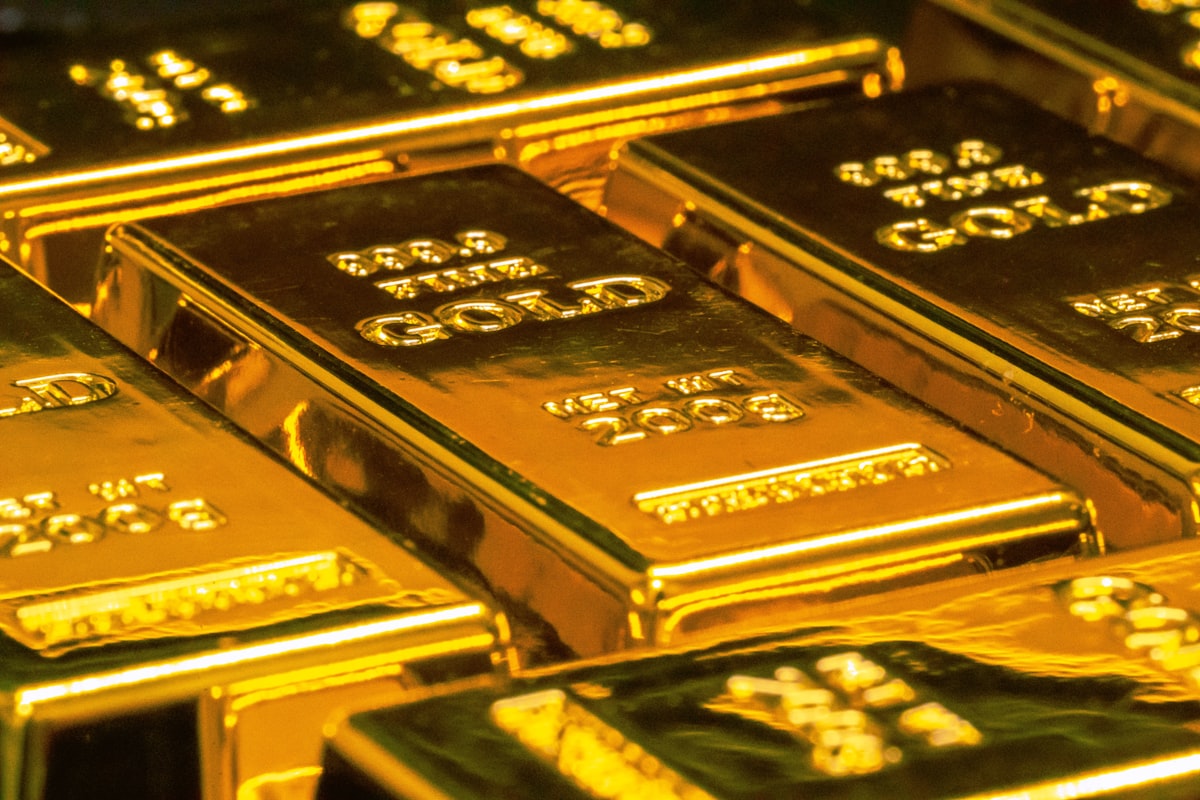
Gold emerged as the ultimate money over centuries of competition. It doesn’t corrode, it’s easily shaped into coins, it’s scarce enough that new supply enters slowly, and it’s universally recognized as valuable across cultures and continents. Silver served as gold’s smaller denomination — useful for everyday purchases where gold was too valuable per unit.
The genius of gold-backed systems was their built-in discipline. Governments could only spend what they collected in taxes or borrowed in gold. They couldn’t silently steal from citizens by debasing the currency — at least not easily. When Roman emperors tried it by mixing cheaper metals into their coins, the result was inflation, economic decline, and eventually the fall of the empire. That lesson repeated throughout history, but rarely was it learned.
Paper Money and the Promise
Paper money started as a practical convenience. Carrying large amounts of gold was dangerous and heavy, so banks issued paper receipts representing gold held in their vaults. These receipts circulated as money because anyone could redeem them for the real thing. The paper itself was worthless — its value came from the gold it represented.
This system worked as long as banks and governments kept the promise to redeem paper for gold. But the temptation to print more receipts than gold on hand proved irresistible. Every major government eventually broke the promise. France did it with the assignat in the 1790s. The Weimar Republic did it in the 1920s. The United States did it in 1971 when Nixon closed the gold window.
The Fiat Era (1971–Present)
Since 1971, every currency on Earth has been fiat — backed by nothing but government decree. Central banks now control the money supply with no physical constraint. The Federal Reserve can create trillions of dollars with a keystroke, and they’ve done exactly that: the US money supply has expanded from under $1 trillion in 1971 to over $21 trillion today.
The fiat experiment is historically unusual. For 5,000 years of recorded monetary history, money was something — gold, silver, copper, salt. For the last 53 years, money has been nothing but a number on a screen, managed by institutions with no hard limit on how much they can create. Every fiat currency in history has eventually failed. Whether the current batch will be different remains an open question — but the purchasing power data isn’t encouraging.
Bitcoin: The Next Chapter?
In 2009, Bitcoin introduced something that had never existed before: a digital money with a fixed supply that no institution controls. Its 21 million coin hard cap mirrors gold’s scarcity, while its digital nature allows instant global transfer. Some see it as the next logical step in money’s evolution — from physical commodities to digital scarcity. Others see it as a speculative experiment. But viewed through the lens of monetary history, Bitcoin is attempting to solve the same problem gold solved for millennia: providing a form of money that governments can’t debase.
Go Deeper
Money’s history is fascinating and essential to understanding modern economics. These videos explore different chapters of the story:
- What is Money? — How money emerged from barter and what makes something “money.”
- Hard Money Explained — The distinction between commodity money and fiat throughout history.
- Economics in One Lesson — Foundational principles that explain why sound money matters.
- Why Gold? Why Bitcoin? — Two monetary technologies separated by millennia, connected by the same principles.
- Sound Money and Austrian Economics — The school of thought that predicted fiat money’s failures.
- What Gives Bitcoin Value? — How Bitcoin fits into money’s long evolutionary arc.
Curious how sound money principles apply to your retirement? Run the numbers with our Bitcoin Retirement Calculator. And for a visual look at what the fiat era has done to your savings, explore Your Dollar is Shrinking.