Last updated: April 2026
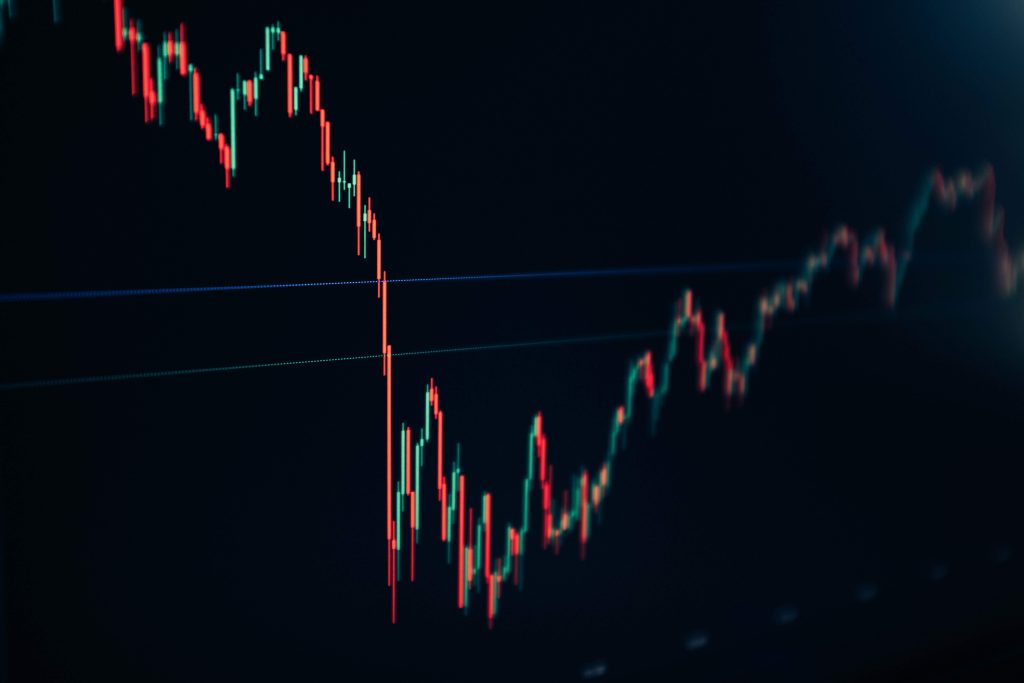
Bitcoin’s price swings are legendary. In 2021, it climbed from $30,000 to $69,000, then crashed to $15,500 by late 2022—a 78% decline from peak. For anyone considering Bitcoin in their retirement planning, understanding volatility isn’t optional. It’s essential.
But volatility isn’t the same as risk, and time horizon dramatically changes how volatility affects you. Let’s break down understanding Bitcoin volatility in retirement and what Bitcoin volatility actually means for retirement planning.
What Is Volatility?
Volatility measures how much an asset’s price fluctuates over time. It’s typically expressed as standard deviation—how far prices swing from the average.
Comparing Volatility Across Assets
Bitcoin: 80-100% annualized volatility
- Daily swings of 5-10% are common
- 20-30% weekly moves happen regularly
- 50-80% drawdowns from peak occur in bear markets
Stocks (S&P 500): 15-20% annualized volatility
- Daily swings typically under 2%
- 10-20% corrections happen every few years
- 30-50% bear markets are rare but memorable (2008, 2020)
Bonds: 5-10% annualized volatility
- Daily movements are usually under 0.5%
- Major moves are rare except during rate shocks
- 10-20% declines are possible but uncommon
Cash: Near-zero volatility
- Essentially stable in nominal terms
- “Volatility” is really inflation eating purchasing power
The bottom line: Bitcoin is 4-5x more volatile than stocks, and 10-20x more volatile than bonds.
Bitcoin’s Historical Volatility: The Numbers
Let’s look at actual Bitcoin drawdowns (peak-to-trough declines):
Major Bitcoin Bear Markets
2011 Crash:
- Peak: $32
- Bottom: $2
- Drawdown: -94%
- Recovery time: ~2 years
2013-2015 Bear Market:
- Peak: $1,150
- Bottom: $170
- Drawdown: -85%
- Recovery time: ~3 years
2017-2018 Bear Market:
- Peak: $19,700
- Bottom: $3,100
- Drawdown: -84%
- Recovery time: ~3 years
2021-2022 Bear Market:
- Peak: $69,000
- Bottom: $15,500
- Drawdown: -78%
- Recovery time: ~2 years (recovered by 2024)
As of mid-2026, the pattern continues to define Bitcoin’s volatility profile: deep cyclical drawdowns of 75-95% followed by multi-year recoveries. Conservative retirement planning treats this depth as part of the asset’s behavior, not an exception to it.
Key Patterns
What history shows:
- Bitcoin has experienced 50%+ drawdowns at least 5 times
- 80%+ drawdowns happened in every early cycle
- Recovery typically takes 2-4 years
- New all-time highs eventually followed every previous peak
- Each cycle’s drawdown has been slightly less severe (94% → 85% → 84% → 78%)
Important caveat: In understanding Bitcoin volatility in retirement, past patterns don’t guarantee future performance. The next bear market could be worse, or Bitcoin could mature into lower volatility.
Why Is Bitcoin So Volatile?
Several factors drive Bitcoin’s extreme price swings:
1. Relatively Small Market Cap
Bitcoin’s ~$900 billion market cap (as of 2024) is significant but small compared to:
- Gold: ~$13 trillion
- US stock market: ~$50 trillion
- Global real estate: ~$300 trillion
Smaller markets move more easily. A few billion dollars of buying or selling pressure creates larger percentage swings.
2. Limited Supply, Variable Demand
Bitcoin’s supply is fixed and predictable (21 million maximum). All volatility comes from demand side:
- Bull markets: Demand surges, price explodes
- Bear markets: Demand collapses, price crashes
- No central bank to “smooth” the volatility
3. Speculation and Leverage
Much Bitcoin trading is speculative:
- Leverage amplifies moves (100x leverage means 1% move = 100% gain or liquidation)
- Cascading liquidations create volatility spirals
- Fear and greed dominate short-term price action
4. Narrative-Driven Asset
Bitcoin lacks traditional valuation metrics:
- No earnings, revenue, or cash flow
- No “fair value” calculation
- Price driven by adoption narrative and sentiment
- This makes it prone to boom-bust cycles
5. Regulatory Uncertainty
Government actions create volatility:
- China mining ban (2021): -50% in weeks
- Exchange regulations: Sharp moves
- ETF approvals: Major rallies
- Policy uncertainty = price uncertainty
6. Limited History
Bitcoin has only existed since 2009—no precedent for:
- How it behaves in different economic cycles
- Recession performance
- Correlation during crises
- Mature-stage volatility levels
Volatility vs Risk: An Important Distinction
Here’s a critical insight: Volatility and risk aren’t the same thing.
Volatility = Price fluctuation over time. Risk = Permanent loss of capital or failure to meet goals
Why This Matters for Retirement Planning
Scenario 1: High Volatility, Low Risk (Long Time Horizon)
You’re 30 years old, planning to retire at 65:
- Bitcoin drops 70% in year 2: High volatility
- But you have 33 more years to recover: Lower risk
- Historical pattern suggests recovery likely
- Volatility is uncomfortable but not threatening
Scenario 2: High Volatility, High Risk (Short Time Horizon)
You’re 63 years old, planning to retire at 65:
- Bitcoin drops 70% in year 1: High volatility
- You need the money in 1 year: Very high risk
- May not recover in time
- Could force retirement delay or lifestyle change
The key insight: Time horizon transforms volatility into either a manageable fluctuation or a dangerous risk.

Time Horizon as Your Volatility Shield
The longer you can hold, the less volatility matters. Here’s why:
Year-by-Year Volatility
1-Year Holding Periods (any given year):
- Bitcoin can be up 300% or down 80%
- Outcome is highly dependent on timing
- Essentially unpredictable short-term
5-Year Rolling Periods:
- Historically, Bitcoin has been positive in most 5-year windows
- Still significant variance in returns
- Some 5-year periods are flat or negative
10-Year Rolling Periods:
- Historically, Bitcoin has been positive in every 10-year window (limited data)
- Massive variance in magnitude (2% vs 500% gains)
- Smooths out most volatility
The Math Behind It
Volatility compounds at the square root of time. Doubling your holding period reduces volatility by ~30%.
Practical meaning:
- 1 year: 100% volatility
- 4 years: ~50% volatility
- 16 years: ~25% volatility
The longer you hold, the narrower the range of likely outcomes becomes.
Dollar-Cost Averaging: The Volatility Antidote
If volatility concerns you, dollar-cost averaging (DCA) is your friend.
How DCA Works
Instead of buying Bitcoin all at once (lump sum), you spread purchases over time:
Example:
- Instead of: $12,000 invested today
- Do this: $1,000/month for 12 months
Why DCA Reduces Volatility Impact
You buy more when the price is low, less when high:
- Month 1: $1,000 buys 0.025 BTC ($40k price)
- Month 6: $1,000 buys 0.040 BTC ($25k price, market down)
- Month 12: $1,000 buys 0.020 BTC ($50k price, market recovered)
Result: Your average cost is lower than if you bought at a single point in time (likely).
DCA Benefits for Retirement Accounts
Reduces timing risk: No need to “time the market.” Smooths entry: Builds position gradually. Behavioral advantage: Easier to stomach volatility when you didn’t go “all in.” Disciplined approach: Removes emotion from buying decisions
Drawback: If Bitcoin only goes up, a lump sum outperforms. But in volatile markets, DCA often wins.
How Much Volatility Can You Actually Handle?
Be honest with yourself. Risk tolerance tests often ask: “Could you handle a 50% decline?”
Most people say yes. Then they sell in panic when it actually happens.
The Reality Check Questions
Ask yourself:
- If your Bitcoin holdings dropped 60% tomorrow, would you:
- Buy more (high risk tolerance)
- Hold steady (medium-high risk tolerance)
- Sell some (medium risk tolerance)
- Panic sell everything (low risk tolerance)
- If Bitcoin crashed 70% and stayed down for 2 years, would you:
- Keep buying monthly (very high risk tolerance)
- Stop buying but hold (high risk tolerance)
- Sell to stop the pain (low risk tolerance)
- Could you watch your Bitcoin allocation drop from $100k to $25k without losing sleep?
- If no, your position is too large
Right-Sizing Your Bitcoin Position
Your Bitcoin allocation should be:
- Large enough to make a difference if it succeeds
- Small enough that you can stomach a 70-80% drop
- Appropriate for your time horizon and other assets
Common sizing:
- Conservative: 1-5% of portfolio
- Moderate: 5-15% of portfolio
- Aggressive: 15-25% of portfolio
- Very aggressive: 25%+ of portfolio
The test: If your Bitcoin position dropped 75%, would it:
- ✅ Be disappointing but not life-altering: Good sizing
- ❌ Devastate your retirement plans: Position too large
- ❌ Barely matters: Might consider increasing if comfortable
Volatility and Retirement Withdrawal Strategy
Understanding Bitcoin volatility in retirement is crucial to your success. Volatility creates a specific challenge in retirement: sequence of returns risk.
The Sequence Risk Problem
Scenario 1: Lucky timing
- Retire in 2020, Bitcoin at $10k
- 2021: Bitcoin to $69k (you’re withdrawing at highs)
- You can safely withdraw more
Scenario 2: Unlucky timing
- Retire in 2021, Bitcoin at $69k
- 2022: Bitcoin to $16k (you’re withdrawing at lows)
- You’re forced to sell more Bitcoin to meet expenses
- This depletes your stack faster
For a deeper treatment of how to design a retirement plan around this risk, see our walkthrough on sequence-of-returns risk in a Bitcoin retirement.
Managing Volatility in Retirement
Strategy 1: Multi-Year Cash Reserve
- Keep 2-3 years of expenses in cash/bonds
- Never forced to sell Bitcoin in a downturn
- Wait for recovery before replenishing cash
Strategy 2: Variable Withdrawal
- Withdraw less during Bitcoin bear markets
- Withdraw more during bull markets
- Requires lifestyle flexibility
Strategy 3: Bitcoin as Minority Allocation
- If Bitcoin is 10% of the portfolio, it’s not make-or-break
- Withdraw from other assets during Bitcoin crashes
- Let Bitcoin recover before touching it
Strategy 4: Never Sell, Use as Collateral
- Borrow against Bitcoin (Bitcoin-backed loans)
- Keep the upside, get liquidity
- Risk: Liquidation if price drops too far
Volatility May Decrease Over Time
Here’s an optimistic note: Bitcoin’s volatility has gradually decreased as the market matures.
Evidence of Declining Volatility
- Early days (2011-2013): 150-200% annualized volatility
- Mid period (2014-2017): 80-120% annualized volatility
- Recent (2018-2024): 60-80% annualized volatility
As Bitcoin’s market cap grows and adoption broadens:
- More participants = harder to move the price
- Institutional involvement = reduced retail panic
- Futures/options markets = better price discovery
- Maturation = potentially lower volatility
Gold analogy: Gold was volatile during its monetization phase, then stabilized as it became established.
Bitcoin might follow a similar path—but this is speculation, not certainty.
Practical Volatility Management for Retirement
If you’re including Bitcoin in retirement planning:
Before Retirement
- Size position appropriately (5-15% for most people)
- Use DCA to build a position (reduces timing risk)
- Hold through cycles (don’t sell in panic)
- Rebalance occasionally (take some profits after big runs)
- Maintain other assets (diversification cushions volatility)
Approaching Retirement (5-10 years out)
- Consider taking some profits (de-risk as retirement nears)
- Build larger cash reserves (buffer for sequence risk)
- Reassess risk tolerance (be honest about comfort with volatility)
- Model bear market scenarios (stress test your plan)
In Retirement
- Never fully depend on Bitcoin alone (diversification critical)
- Maintain 2-3 year cash buffer (avoid selling during crashes)
- Withdraw variable amounts (flexible based on Bitcoin price)
- Consider Bitcoin as a legacy asset (pass to heirs, don’t spend all)
The Bottom Line on Bitcoin Volatility
Bitcoin is volatile—dramatically more so than stocks or bonds. This is a feature of its current stage, not necessarily a permanent characteristic.
For retirement planning, volatility matters less if:
- ✅ You have a long time horizon (10+ years)
- ✅ You size your position appropriately
- ✅ You can hold through brutal drawdowns
- ✅ You have other assets to cushion the swings
- ✅ You use DCA to smooth your entry
Volatility becomes dangerous if:
- ❌ You need the money soon (under 5 years)
- ❌ Your position is too large
- ❌ You panic sell during crashes
- ❌ Bitcoin is your only asset
- ❌ You bought all at once at the wrong time
Remember: Volatility isn’t risk if you have time and discipline. It’s the price you pay for Bitcoin’s potential long-term returns. Understanding Bitcoin volatility in retirement puts you on a firm footing.
Ready to model how Bitcoin volatility affects your specific retirement scenario? Try our calculator with different growth assumptions to see the range of possibilities.
Model Bitcoin Volatility Scenarios →
Learn more about Bitcoin’s long-term growth potential and how much Bitcoin you might need to retire. Read about our methodology.
Bitcoin Volatility Quick Reference
Use this at-a-glance reference when making decisions about your Bitcoin retirement allocation. These figures represent historical ranges and are not guarantees of future performance.
| Metric | Bitcoin | S&P 500 | Bonds |
|---|---|---|---|
| Annualized Volatility | 60–100% | 15–20% | 5–10% |
| Worst Bear Drawdown | -94% (2011) | -57% (2009) | -20% (2022) |
| Typical Recovery Time | 1–3 years | 2–5 years | 6–18 months |
| Daily Swing (Common) | 3–8% | 0.5–1.5% | 0.1–0.3% |
| 10-Year Positive Periods | All (so far) | Most | Most |
The key takeaway: Bitcoin’s volatility is real and significant — but so is its long-run track record. Matching your allocation size to your time horizon and risk tolerance is the most important variable you control.
Frequently Asked Questions About Bitcoin Volatility
Is Bitcoin’s volatility actually decreasing over time?
Yes — gradually. In 2011–2013, Bitcoin’s annualized volatility exceeded 150–200%. By 2018–2024, it had declined to roughly 60–80%. As the market cap grows and institutional adoption expands, large capital flows have less relative impact. This trend is likely to continue, though Bitcoin will probably remain significantly more volatile than stocks and bonds for the foreseeable future. A maturing asset class doesn’t become a stable one overnight.
Can you still retire comfortably with Bitcoin in your portfolio?
Yes — if you plan correctly. The most important factors are position sizing (most retirees do well with 5–15% allocation), maintaining a 2–3 year cash buffer to avoid selling during crashes, and not relying on Bitcoin as your only income source. Retirees with diversified income streams — Social Security, traditional investments, pensions — can tolerate much more Bitcoin volatility than someone with no other assets. The calculator on this site lets you stress-test different withdrawal scenarios against historical Bitcoin volatility ranges.
What is sequence of returns risk, and why does it matter for Bitcoin?
Sequence of returns risk is the danger that a major market drop early in retirement permanently damages your portfolio. With Bitcoin’s volatility, this risk is amplified — retiring into a bear market means selling more Bitcoin at low prices to fund living expenses, leaving fewer coins to recover when prices rebound. The mitigation is straightforward: hold 2–3 years of expenses in cash or stable assets so you never have to sell Bitcoin at the worst time. Timing your retirement or gradually reducing allocation as you approach it also helps.
How do I know if my Bitcoin allocation is too large?
A simple gut-check: if Bitcoin dropped 70% tomorrow and stayed there for two years, would you panic sell? If yes, your position is too large. Your allocation should be sized so that the worst-case scenario is painful but survivable — not catastrophic. For most people in or near retirement, that means Bitcoin represents a meaningful but not dominant share of overall net worth. Run the numbers with different allocation percentages in our retirement calculator to see how each scenario plays out across Bitcoin’s historical volatility range.
Model Your Own Bitcoin Retirement Scenario
Understanding volatility conceptually is only half the battle. The other half is running your specific numbers — your age, savings, target retirement income, and Bitcoin allocation — against realistic growth and volatility scenarios. Our Bitcoin Retirement Calculator lets you do exactly that. Try conservative, moderate, and aggressive assumptions side by side. See how a 5% allocation compares to a 15% one over your timeline. No email required — just plug in your numbers and explore the range of possibilities.
Run Your Bitcoin Retirement Projections →
This article is for educational purposes only and does not constitute financial, investment, or retirement advice. Consult qualified professionals before making financial decisions.
Related Reading
- Bitcoin IRA: How to Include Bitcoin in Your Retirement Account
- Bitcoin vs Gold for Retirement: Which Protects Your Wealth Better?
- How Much Bitcoin Do You Need to Retire?
- How to Build a Balanced Portfolio with Bitcoin
Continue Reading
- Modeling Bitcoin Growth Scenarios
- Bitcoin Dollar Cost Averaging for Retirement
- Bitcoin Self-Custody for Retirement
4 thoughts on “Understanding Bitcoin Volatility in Retirement Planning”
Comments are closed.